
Types of Fire Extinguishers and Their Uses
Fire extinguishers are one of the most important first-response tools in fire safety. When selected, installed and maintained correctly, they can help control a small fire in its early stage and prevent serious damage to people, property and business operations.
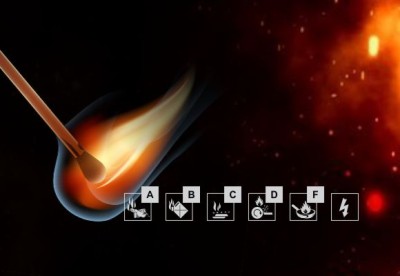
However, not every fire extinguisher is suitable for every fire. A fire caused by burning paper requires a different extinguishing approach than a fire involving flammable liquids, cooking oils, electrical equipment or combustible metals. Using the wrong extinguisher can be ineffective and, in some cases, dangerous.
This guide explains the main types of fire extinguishers, their applications, fire classes, extinguishing agents, pressure systems, activation methods, maintenance requirements and key factors to consider when choosing the right extinguisher for your premises.
What Are Fire Extinguishers Used For?
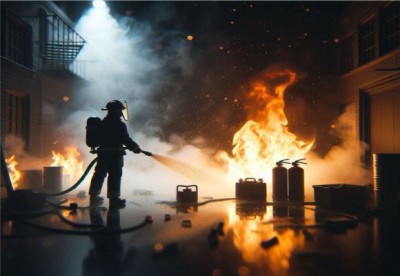
Fire extinguishers are designed for the initial stage of a fire. Their purpose is to help trained or informed users react quickly before the fire spreads.
They are commonly used in:
- Homes and apartments
- Offices and administrative buildings
- Shops and commercial facilities
- Hotels and restaurants
- Factories and warehouses
- Schools and public institutions
- Server rooms and technical areas
- Vehicles and industrial equipment areas
A fire extinguisher should only be used when the fire is small, the evacuation route is clear, and the user can operate it safely. If the fire is spreading, producing heavy smoke or creating immediate danger, evacuation and emergency notification must be the priority.
Main Types of Fire Extinguishers by Agent
The extinguishing agent is the material inside the extinguisher that suppresses the fire. Each agent works differently and is suitable for specific fire risks.
1. Water Fire Extinguishers
Water extinguishers are mainly used for Class A fires involving solid combustible materials such as wood, paper and textiles. They work by cooling the burning material and reducing the temperature below the ignition point.
Suitable for:
- Offices
- Schools
- Public buildings
- Storage areas with paper or cardboard
- General Class A risks
Not suitable for:
- Flammable liquids
- Cooking oils and fats
- Live electrical equipment, unless specifically tested and marked
- Combustible metals
2. Water Mist Fire Extinguishers
Water mist extinguishers use very fine water droplets to suppress fire. The small droplets create a cooling effect and help reduce heat and oxygen around the flame.
Depending on the product’s certification and rating, water mist extinguishers may be suitable for certain Class A risks and, in some cases, specific Class F or electrical-risk applications. The exact use must always be verified from the extinguisher label and technical documentation.
Suitable for:
- Class A fires
- Some sensitive environments, depending on rating
- Certain applications where reduced water damage is preferred
Key advantage: Water mist technology uses water efficiently and may reduce collateral damage compared with traditional water extinguishers.
3. Foam Fire Extinguishers
Foam extinguishers are commonly used for Class A and Class B fires. They work by forming a blanket over the burning surface, reducing oxygen contact and cooling the material.
Foam is especially useful where both solid combustible materials and flammable liquids are present.
Suitable for:
- Offices
- Warehouses
- Workshops
- Garages
- Industrial spaces
- Areas with Class A and B fire risks
Not suitable for:
- Cooking oil fires, unless specifically rated
- Combustible metals
- Live electrical equipment, unless specifically approved and marked
4. Dry Powder Fire Extinguishers
Dry powder extinguishers are versatile and commonly used for Class A, B and C fires. They work by interrupting the chemical reaction of the fire and separating the fuel from oxygen.
ABC powder extinguishers are among the most widely used fire extinguishers because they cover several common fire classes.
Suitable for:
- Class A fires
- Class B fires
- Class C fires
- Outdoor areas
- Vehicles
- Workshops
- Industrial environments
Important limitation: Dry powder can reduce visibility and leave residue. For this reason, it may not be ideal for offices, server rooms, clean environments or enclosed spaces unless specifically required by the risk assessment.
Class D note: Class D fires require special metal powder extinguishers. Standard ABC powder should not be considered suitable for combustible metal fires unless the extinguisher is specifically marked and approved for that purpose.
5. Carbon Dioxide – CO2 Fire Extinguishers
CO2 extinguishers contain carbon dioxide gas under pressure. They extinguish fire mainly by displacing oxygen around the fire and are widely used for flammable liquid fires and electrical equipment risks.
They leave no residue, which makes them useful in areas with electrical or sensitive equipment.
Suitable for:
- Class B fires
- Electrical panels
- Server rooms
- Offices with electrical equipment
- Laboratories
- Technical rooms
Not ideal for:
- Deep-seated Class A fires
- Cooking oil fires
- Combustible metals
- Confined spaces without adequate ventilation
CO2 extinguishers are effective for specific risks, but they do not provide strong cooling. If hot materials remain, reignition may occur.
6. Wet Chemical Fire Extinguishers
Wet chemical extinguishers are designed mainly for Class F fires involving cooking oils and fats. They work by cooling the burning oil and forming a layer over the surface to help prevent reignition.
Suitable for:
- Commercial kitchens
- Restaurants
- Hotels
- Canteens
- Food preparation areas
Not suitable for:
- General electrical risks, unless specifically approved
- Combustible metals
- Flammable gases
- General industrial use unless the extinguisher is rated for the specific risk
7. Special Fire Extinguishers
Some fire risks require specialized extinguishers. These include Class D metal fire extinguishers, lithium-ion battery fire extinguishers, clean agent extinguishers, water mist extinguishers for specific applications and extinguishers for sensitive equipment or special hazards.
Special risks should always be assessed professionally because the wrong extinguisher may not control the fire effectively.
Fire Extinguishers by Weight and Mobility
Portable Fire Extinguishers
Portable extinguishers are designed to be carried and operated by hand. They are commonly used in homes, offices, vehicles, shops and small commercial spaces. They are suitable for quick first response in accessible areas.
Mobile Fire Extinguishers
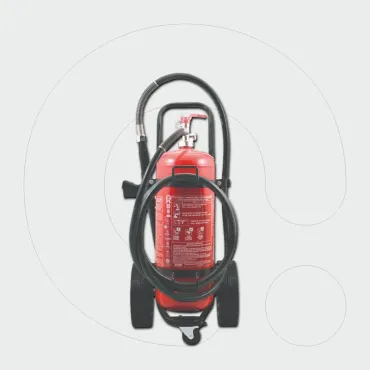
Mobile extinguishers are larger units mounted on wheels. They are used where a higher quantity of extinguishing agent is required.
They are common in:
- Industrial facilities
- Fuel storage areas
- Airports
- Warehouses
- Large workshops
- Power plants
- Manufacturing facilities
Mobile extinguishers are especially useful where the fire risk is higher or where larger equipment and materials are present.
Fire Extinguishers by Pressure System
Stored Pressure Fire Extinguishers
In stored pressure extinguishers, the extinguishing agent and propellant gas are stored together in the cylinder under constant pressure. When the valve is activated, the agent is discharged immediately.
Advantages:
- Simple operation
- Immediate discharge
- Common in portable extinguishers
- Usually equipped with a pressure gauge, depending on type
Cartridge Operated Fire Extinguishers
In cartridge operated extinguishers, the propellant gas is stored in a separate internal or external cartridge. The pressure is released only when the extinguisher is activated.
Advantages:
- Suitable for certain professional and industrial applications
- Easier inspection of some components
- Common in heavy-duty or specific-use extinguishers
Both systems are effective when properly maintained and used according to the manufacturer’s instructions.
Fire Extinguishers by Activation Mechanism
Lever Valve
This is one of the most common activation methods. The user removes the safety pin and presses the lever to discharge the extinguishing agent.
Twist Valve
With a twist valve, the user opens the valve by twisting the control mechanism. The agent is then released through the nozzle or hose.
Knob-Operated System
Some extinguishers, especially cartridge-operated models, use a knob or similar activation system to release pressure and prepare the unit for discharge.
Regardless of the mechanism, every extinguisher must include clear operating instructions on the label.
How to Choose the Right Fire Extinguisher
Choosing the right fire extinguisher requires more than simply selecting a red cylinder. The correct choice depends on the fire risks present in the building or working area.
Key factors include:
- Type of materials present
- Fire class risk
- Electrical equipment
- Presence of flammable liquids or gases
- Kitchen or cooking oil risk
- Size and layout of the premises
- Number of occupants
- Environmental conditions
- Required extinguishing capacity
- Applicable standards and local regulations
For example, an office may require extinguishers suitable for Class A risks and electrical equipment. A restaurant kitchen may require a wet chemical extinguisher for Class F fires. A factory may need several extinguisher types, including powder, foam, CO2 or mobile units, depending on the processes and materials present.
Quick Comparison Table
| Extinguisher Type | Common Use | Suitable For | Not Recommended For |
|---|---|---|---|
| Water | General solid materials | Class A | Flammable liquids, oils, electrical risks, metals |
| Water Mist | Selected modern applications | Class A and specific rated uses | Use only according to rating |
| Foam | Commercial and industrial risks | Class A and B | Electrical risks unless approved, Class F, metals |
| Dry Powder ABC | Versatile general use | Class A, B and C | Clean or sensitive indoor spaces, unless required |
| CO2 | Electrical and flammable liquid risks | Class B and electrical equipment | Deep Class A fires, Class F, metals |
| Wet Chemical | Kitchens | Class F | General industrial risks, unless rated |
| Special Powder | Metal fires | Class D | General use unless specified |
| Clean Agent | Sensitive equipment | Specific rated risks | General use unless designed for the risk |
How to Use a Fire Extinguisher Safely
A common method for using a portable fire extinguisher is the PASS technique:
P – Pull the Pin
Remove the safety pin to unlock the operating mechanism.
A – Aim at the Base of the Fire
Do not aim at the flames. Aim at the source of the fire.
S – Squeeze the Handle
Press the handle or lever to discharge the extinguishing agent.
S – Sweep from Side to Side
Move the nozzle from side to side while covering the base of the fire.
Before using an extinguisher, always make sure:
- The fire is small and contained
- You have a clear escape route
- The correct extinguisher is available
- You are not exposed to heavy smoke
- Emergency services have been notified when necessary
If there is any doubt, evacuate immediately.
Fire Extinguisher Maintenance and Inspection
A fire extinguisher is only reliable if it is properly maintained. An extinguisher that is damaged, discharged, expired, blocked or incorrectly pressurized may fail during an emergency.
Regular checks should include:
- The extinguisher is in the correct location
- Access is not blocked
- The safety pin and seal are intact
- The pressure gauge is in the correct range, where applicable
- The hose or nozzle is not damaged
- The label is readable
- There are no signs of corrosion or leakage
- The extinguisher has not been used or partially discharged
Professional inspection and servicing should be carried out by competent and authorized personnel according to applicable standards, manufacturer instructions and local legal requirements.
Common Mistakes When Choosing Fire Extinguishers
Using One Extinguisher Type for Every Risk
No single extinguisher is ideal for all fire risks. Each area should be assessed according to its specific hazard.
Ignoring Electrical Equipment
Offices, server rooms, technical rooms and control panels often require extinguishers suitable for electrical risks.
Using Powder Where Residue Is a Problem
Dry powder can be effective, but it can also create visibility issues and leave residue. In sensitive areas, CO2 or clean agent extinguishers may be more appropriate.
Not Protecting Kitchens Properly
Class F risks require dedicated extinguishers. A standard water or powder extinguisher may be unsuitable and unsafe for cooking oil fires.
Forgetting Maintenance
Even the correct extinguisher can fail if it is not maintained.
Placing Extinguishers in Inaccessible Areas
Fire extinguishers must be visible, accessible and properly mounted.
Why Professional Fire Risk Assessment Matters
A professional fire risk assessment helps determine:
- Which fire risks are present
- What extinguisher types are required
- How many extinguishers are needed
- Where they should be installed
- Whether additional systems are required
- How often maintenance should be carried out
- Whether staff training is necessary
This is especially important for businesses, industrial facilities, public buildings, hotels, restaurants and premises with higher fire loads or special hazards.
Correct extinguisher selection is not only a safety measure. It is also part of legal compliance, operational continuity and responsible facility management.
Frequently Asked Questions
What is the most common type of fire extinguisher?
ABC dry powder extinguishers are among the most common because they can be used on Class A, B and C fires. However, they are not always the best option for every environment, especially sensitive indoor areas.
Can I use a water extinguisher on electrical equipment?
A standard water extinguisher should not be used on live electrical equipment unless it is specifically tested and marked for that use.
Which extinguisher is best for offices?
Offices commonly require protection for Class A materials such as paper and furniture, as well as electrical equipment. The exact combination should be based on a fire risk assessment.
Which extinguisher is needed for kitchens?
Commercial kitchens usually require wet chemical extinguishers for Class F fires involving cooking oils and fats.
Are CO2 extinguishers suitable for server rooms?
CO2 extinguishers are commonly used near electrical equipment because they leave no residue. For larger or more sensitive server rooms, automatic clean agent systems may also be considered.
How often should fire extinguishers be inspected?
Fire extinguishers should be checked regularly and serviced by competent personnel according to applicable standards, manufacturer instructions and local legal requirements.
Can one extinguisher cover all fire risks?
No. Different fire risks require different extinguishing agents. The correct extinguisher must be selected based on the actual hazards present.
Conclusion
Fire extinguishers are essential fire safety equipment, but their effectiveness depends on correct selection, proper installation, regular maintenance and safe use.
Water, foam, dry powder, CO2, wet chemical, water mist and special extinguishers each have specific applications. The right choice depends on the type of fire risk, the environment, the equipment present and the applicable safety requirements.
For homes, offices, commercial premises, industrial facilities and public buildings, fire extinguishers should never be selected randomly. A professional assessment ensures that the right extinguishers are installed in the right locations and remain ready for use when needed.
Need Help Choosing the Right Fire Extinguisher?
Choosing the right fire extinguisher is a critical part of fire safety and legal compliance. If you need professional support for selecting, installing, inspecting or maintaining fire extinguishers, our fire safety specialists can help you identify the right solution for your premises and ensure that your equipment is ready for use in an emergency.
Contact us for professional fire extinguisher selection, servicing and fire protection consulting.

 English
 Shqip
Shqip
