Click for more products.
No products were found.

What Is Fire? Understanding the Fire Triangle and Fire Tetrahedron

Posted on01.11.2024 by 5516
Fire

Fire is a fascinating and dangerous phenomenon that plays an essential role in our daily lives. Whether used for heating, cooking, or powering engines, fire has proven to be a vital tool for human advancement. However, when uncontrolled, it can pose a severe threat, causing destruction and loss of life. In this article, we will explore the essence of fire, the principles that enable it, and how to stay safer by understanding fire classifications.

Fire triangle and fire tetrahedron: what creates fire and what keeps it burning?

To understand how a fire is extinguished, we must first understand how it starts. Fire does not occur randomly. It is the result of several essential elements working together to start and sustain the combustion process.

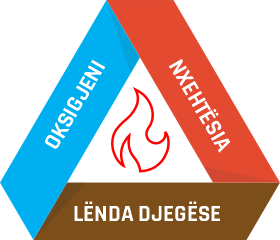
In fire protection, this process is commonly explained through two key concepts: the fire triangle and the fire tetrahedron. The fire triangle explains the three basic elements required for combustion, while the fire tetrahedron adds a fourth element that helps explain why fire continues to burn after it has started.

Understanding these elements is important in practice because every fire extinguishing method aims to remove, limit or interrupt at least one of them. If one element is missing, the fire cannot continue.


What is the fire triangle?

The fire triangle is a simple way to explain the three basic elements needed for fire to occur: fuel, oxygen and heat.

These three elements must be present at the same time. If one of them is removed, the combustion process stops and the fire is extinguished or cannot start.

Fuel

Fuel is any material or substance that can burn. It is the energy source of the fire. Without fuel, the fire has nothing to consume and cannot continue.

In a home, office, warehouse or workplace, fuel may include common materials such as paper, cardboard, textiles, wooden furniture, plastic packaging, oils, fuels, solvents, gases and various chemicals.

The greater the amount of fuel and the easier it is to ignite, the higher the risk that the fire will spread quickly.

Oxygen

Oxygen is the element that supports the combustion process. Under normal conditions, air contains approximately 21% oxygen, which is usually enough to keep a fire burning.

In addition to oxygen in the air, some substances can increase fire risk because they contain or release oxygen during chemical reactions. These are known as oxidizing agents. Examples may include ammonium nitrate and other oxidizing substances.

When oxygen is limited or separated from the combustion zone, the fire weakens and may be extinguished. This is why some extinguishing methods work by covering the fire and separating it from the air.

Ignition source or heat

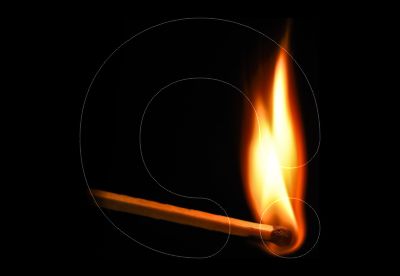
Heat is the energy that raises the temperature of the fuel to the point where it ignites. This temperature is known as the ignition point.

Common ignition sources include open flames, electrical sparks, damaged electrical equipment, hot surfaces, welding, smoking materials, electrical overload and mechanical friction.

Controlling heat sources is one of the most important fire prevention measures. Many fires can be avoided by maintaining electrical installations, keeping combustible materials away from heat sources and following workplace fire safety rules.

What is the fire tetrahedron?

The fire tetrahedron is a more complete explanation of the combustion process. It includes four elements: fuel, oxygen, heat and the chain chemical reaction.

The first three elements are explained by the fire triangle. The fourth element, the chain chemical reaction, explains how fire continues to burn once combustion has started.

Chain chemical reaction

During combustion, highly reactive particles known as free radicals are created. These particles keep the combustion process active and allow the reaction to continue from one stage to the next.

If this chain chemical reaction is interrupted, the fire is extinguished even if fuel, oxygen and heat are still present in the environment. This is why some extinguishing agents work by interrupting the chemical reaction of the flame.

Dry powder extinguishers and certain specialist extinguishing agents work in this way: they interfere with the chemical reaction of combustion and stop the spread of the flame.


How is fire extinguished by removing one of the elements?

Every fire extinguishing method is based on removing or interrupting one of the elements of the fire triangle or fire tetrahedron. In practice, this can be done in several ways.

Cooling the fire

Cooling means reducing the temperature of the burning material. This method is commonly used for Class A fires, such as wood, paper or textiles. Water is the most common example of an extinguishing agent that works by cooling.

Separating the fire from oxygen

When a fire is separated from oxygen, it cannot continue to burn. This can be achieved with foam, fire blankets or extinguishing agents that create a protective layer over the surface of the burning material.

Removing the fuel

In some cases, a fire can be controlled by removing or cutting off the fuel supply. For example, in fires involving gases, closing the gas valve is often the most important action, if it can be done safely.

Interrupting the chemical reaction

Some extinguishing agents work by interrupting the chain chemical reaction. This is particularly important in fires where the flame must be extinguished quickly and where cooling or oxygen separation alone may not be sufficient.


Why is this concept important in fire protection?

Understanding the fire triangle and fire tetrahedron helps identify fire risks and select the right prevention and response measures. Fire should not be seen only as a visible flame, but as a process that requires specific conditions to start and continue.

This knowledge is important for designing fire protection systems, selecting fire extinguishers, preparing emergency plans, training staff and organizing workplaces safely.

By identifying where combustible materials are located, which ignition sources may be present, and how oxygen or the chemical reaction can be limited, more effective measures can be taken to prevent fire or control it at an early stage.


Conclusion

The fire triangle explains the three basic elements of combustion: fuel, oxygen and heat. The fire tetrahedron adds the chain chemical reaction, which helps explain why fire continues to burn after it has started.

To extinguish a fire, at least one of these elements must be removed or interrupted. This is the basic principle behind fire extinguishers, automatic fire suppression systems and other fire protection measures.

Understanding these concepts is a fundamental step toward better safety at home, in the workplace and in any building where fire risk may be present.

Last updated on 09 May 2026


Notice! The use of articles and materials published on mbrojtjangazjarri.com is permitted only by sharing the original article link. Any use or reproduction of these materials without prior permission from Albkos Safety™ is prohibited and constitutes a violation of copyright.
Related products

Menu

Settings

Click for more products.
No products were found.