Fire and heat spread
Posted on11.11.2024
by
ALBKOS SAFETY
6117
Fire and heat can spread rapidly, posing significant risks to life and property. Understanding the primary mechanisms of fire spread is essential for effective prevention and control. In this blog, we’ll explore the four key ways fire and heat spread.
Fire spread: how heat, smoke and flames move through a building
Fire does not always remain limited to the place where it starts. If it is not controlled in time, it can spread quickly from one area to another, endangering people, property, equipment and the normal operation of a building.
Fire spread is closely related to the way heat is transferred. Even before visible flames reach another area, heat, smoke and hot gases can move through a building and create conditions for other materials to ignite.
Understanding how fire spreads is essential in fire protection. It helps in designing fire compartments, escape routes, ventilation systems, fire doors, fire stopping measures, detection systems and extinguishing systems.
Main ways fire spreads
Fire and heat can spread mainly in four ways: through conduction, convection, radiation and direct burning. Each method works differently and requires appropriate fire prevention and control measures.
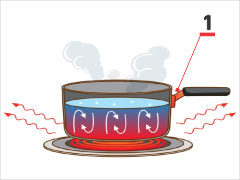
1. Conduction
Conduction is the transfer of heat through direct contact with solid materials. Heat moves from the hotter part of a material to the cooler part, even if flames are not directly present in that area.
This type of heat transfer is common in materials that conduct heat well, especially metals. For example, an unprotected steel beam, metal floor plate or vertical metal partition can transfer heat from a fire-affected area to another part of the building.
If metal structures are not properly protected, they can heat up quickly, lose mechanical strength and contribute to fire spread or structural damage.
Practical examples: steel beams, metal ducts, pipes, metal partitions, structural steel elements and metal plates connecting different areas of a building.
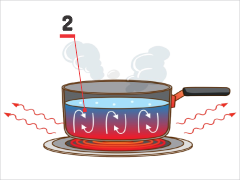
2. Convection
Convection is the spread of heat through the movement of hot gases, smoke, air or liquids. In buildings, this is one of the most dangerous ways fire can spread because smoke and hot gases can move very quickly through open spaces and technical routes.
Hot gases rise and may travel through staircases, lift shafts, corridors, ceiling voids, service shafts and ventilation systems. This can allow heat and smoke to reach other parts of the building before flames are visible there.
Convection is one of the reasons why smoke can spread rapidly to upper floors and why staircases, corridors and ventilation systems must be carefully designed and maintained from a fire safety perspective.
Practical examples: smoke spreading through staircases, hot gases moving through ventilation ducts, fire spread above suspended ceilings and heat movement through corridors.
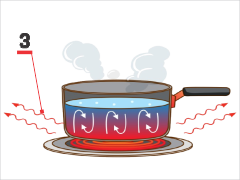
3. Radiation
Radiation is the transfer of heat through thermal waves, without the need for direct contact between the heat source and the material that may ignite.
A combustible material can gradually absorb heat from a nearby source until it reaches its ignition temperature. This can happen even when the material is not touching the flame.
For example, an electric heater, a very hot surface, industrial equipment or the flames of an existing fire can radiate enough heat to ignite nearby materials such as curtains, paper, furniture, packaging or plastic materials.
Practical examples: combustible materials placed near heaters, furniture located too close to heat sources, and materials exposed to flames or hot surfaces.
4. Direct burning
Direct burning occurs when a flame or ignition source comes into direct contact with a combustible material and ignites it.
A combustible material may release flammable gases or vapours when heated. If these vapours come into contact with an open flame, spark or glowing ember, they can ignite and allow the fire to grow.
For example, a smouldering cigarette touching a mattress can heat the mattress material until it begins to release flammable vapours. These vapours may then ignite when they come into contact with the cigarette ember, causing the fire to develop.
Direct burning is especially dangerous in areas where combustible materials are exposed, such as warehouses, hotel rooms, offices, workshops, production facilities and spaces where ignition sources are not properly controlled.
Practical examples: open flames near combustible materials, an unextinguished cigarette, welding sparks, damaged electrical equipment or flammable materials placed near heat sources.
Directions and routes of fire spread
If it is not controlled, fire can spread in several directions: upward, downward, sideways, forward, backward and through hidden spaces within the building. The speed and direction of fire spread depend on the materials present, ventilation conditions, building layout and available paths for smoke and heat movement.
Fire can also spread through air-conditioning systems, ventilation ducts, ceiling voids, service shafts, cable routes, pipe penetrations and unprotected openings between different fire compartments.
For this reason, fire-resistant compartmentation, proper sealing of service penetrations, fire dampers, fire doors and maintenance of technical systems are essential measures for limiting the spread of fire and smoke.
Why understanding fire spread matters
Understanding fire spread helps prevent situations where a small fire develops into a serious incident. In the early stage, the fire may still be limited, but heat, smoke and hot gases can make a building unsafe within a very short time.
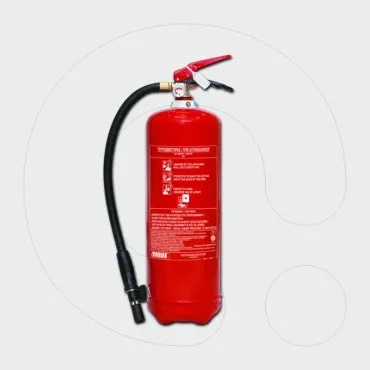
This knowledge is important for building design, positioning fire extinguishers, planning escape routes, maintaining ventilation systems and organizing fire prevention measures in the workplace.
The better fire spread is understood, the easier it becomes to define effective measures to limit it, protect people and reduce property damage.
Conclusion
Fire can spread through conduction, convection, radiation and direct burning. Each method presents a different risk and must be considered during fire risk assessment and fire protection planning.
Controlling fire spread does not depend only on fire extinguishers. It also requires suitable fire-resistant compartmentation, control of ignition sources, maintenance of technical systems, clear escape routes and quick response during the early stage of a fire.
In fire protection, the goal is not only to extinguish the fire, but also to limit its spread so that people have enough time to evacuate and damage remains as limited as possible.
Last updated on 09 May 2026
Notice! The use of articles, photographs and other materials published on mbrojtjangazjarri.com is permitted only by sharing the original article link. Any use or reproduction of these materials without prior permission from Albkos Safety™ is prohibited and constitutes a violation of copyright.


 English
 Shqip
Shqip
