Fire extinguisher inspection and servicing in Kosovo
In this blog, we will explain the importance of inspecting and servicing fire extinguishers. You will learn who should inspect fire extinguishers, when monthly inspection should be carried out, when periodic servicing by authorised personnel is required, and why documenting these actions is essential. We will also cover the main legal requirements in Kosovo, the difference between inspection, servicing and testing, as well as the most common mistakes that can make a fire extinguisher not ready for use. This guide is useful for business owners, institutions, facility managers and anyone responsible for fire safety.
Servicing and inspection of fire extinguishers in Kosovo: who should do it, when and how?
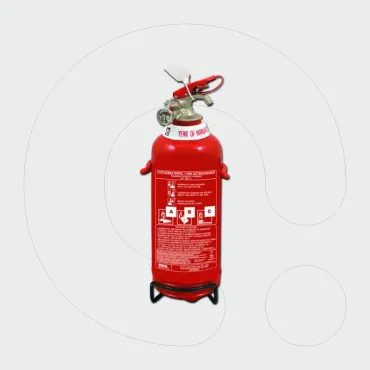
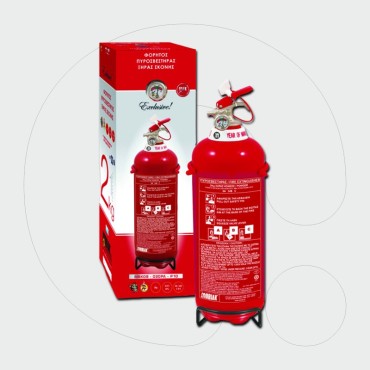
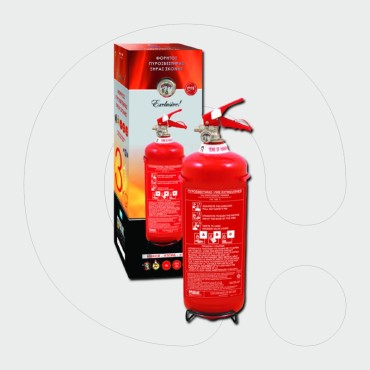
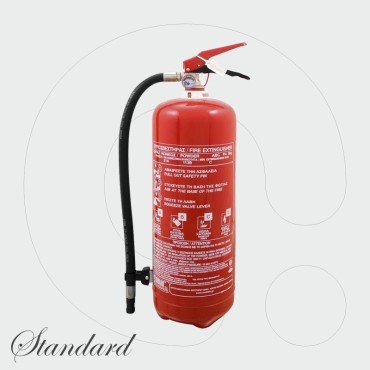
If you are responsible for a business, institution, warehouse, office or any other facility, fire extinguishers should not be seen simply as devices that “just need to be somewhere” — on a wall, in a corner or on a bracket. In the event of a fire, they are often the first and most important means for limiting the spread of fire and preventing a small incident from turning into serious damage, or even worse, a tragedy.
So, the mere presence of a fire extinguisher in a facility is not enough. The extinguisher can perform this role only if it is truly ready for use. A fire extinguisher that is not inspected and serviced regularly may fail exactly when it is needed most. It may have lost pressure, be damaged, have been used before, be blocked, or simply no longer be suitable for the area where it is installed.
For this reason, the inspection and servicing of fire extinguishers is not only a legal formality. It is part of everyday care for the safety of people, property and the continuity of activity within the facility.
In Kosovo, this area is mainly regulated by Law No. 08/L-261 on Fire Protection, while the technical requirements for the inspection, servicing and testing of fire extinguishing appliances are addressed by Administrative Instruction (MIA) No. 17/2017 on the Testing and Servicing of Fire Extinguishing Appliances, as a specific technical act in this field.
Why are inspection and servicing important?
A fire extinguisher must always be ready for use. It is not enough for it to be purchased and installed in a facility. It must be functional, accessible, visible and suitable for the risk present in that area.
The most common problems encountered in practice are:
- loss of pressure;
- missing seal or safety pin;
- rusting of the cylinder;
- illegible instruction label;
- missing serial number or identification data;
- an extinguisher that has been used but not refilled;
- access blocked by goods, furniture or other equipment;
- use of an extinguisher that is not suitable for the actual risk of the area;
- lack of certification or relevant technical documentation.
Therefore, the main question is not only: “Do we have a fire extinguisher in the facility?” The question that truly matters is: is the extinguisher ready for use exactly when we need it most — in the event of a fire?
What Does the Law in Kosovo Require?
Law No. 08/L-261 on Fire Protection defines the responsibilities related to the protection of human life, property and the environment from fire. For owners and users of buildings, this means that they are required to take fire protection measures and to provide fire extinguishing equipment, devices and installations, in accordance with Article 8 and Article 18 of this law.
In practice, this includes several key obligations:
- fire extinguishing equipment must be suitable for its intended purpose;
- equipment must be kept in proper working condition and maintained in accordance with technical standards and the manufacturer’s instructions;
- its condition must be supported by appropriate documentation;
- fixed fire alarm, fire extinguishing and gas detection systems must be verified by licensed legal entities;
- portable and mobile fire extinguishers must be inspected every six months;
- fire extinguishing equipment, devices and installations must be clearly marked and easily accessible for use.
In addition, equipment, devices and installations that are imported or placed on the market must be accompanied by the relevant certificate, confirming their compliance and suitability for the intended purpose, in accordance with Article 17 of the law.
These requirements are directly connected to practical fire safety within a building. A fire extinguisher that is not accessible, not clearly marked, not inspected or not supported by documentation proving its proper condition cannot be considered safe and functional fire protection equipment.
What does Administrative Instruction (MIA) No. 17/2017 regulate?
The requirements for fire extinguishing appliances are explained more specifically in Administrative Instruction (MIA) No. 17/2017 on the Testing and Servicing of Fire Extinguishing Appliances.
This instruction determines how the inspection, servicing and testing of fire extinguishing appliances are carried out. It applies to portable fire extinguishing appliances and mobile fire extinguishing appliances, as well as to the entities that use or service this equipment.
In summary, this instruction explains:
- which types of extinguishers are included;
- which standards they must comply with;
- how they must be maintained;
- when regular inspection is carried out;
- when periodic servicing is carried out;
- who is entitled to perform servicing;
- how the service must be documented;
- what must be done after use, damage or suspected irregularity.
Standards that fire extinguishers must meet
Fire extinguishing appliances are pressure equipment and must be safe during storage, transport and use. For this reason, they must be manufactured, tested and certified according to the relevant standards.
According to Article 4 of Administrative Instruction (MIA) No. 17/2017:
- portable fire extinguishing appliances must meet the requirements of the European standard EN 3 (EN 3-7, EN 3-8, EN 3-9 and EN 3-10);
- mobile fire extinguishing appliances must meet the requirements of the European standard EN 1866.
In practice, this means that the extinguisher must have technical documentation and certification proving compliance with the relevant standard.
Therefore, when choosing a fire extinguisher, do not rely only on size or price. You should also check the fire class, extinguishing rating, type of extinguishing agent, label markings, certification and technical documentation.
For more information about extinguisher types, you can read our article on types of fire extinguishers and their use.
Inspection, servicing and testing: what is the difference?
These terms are often used as if they had the same meaning, but according to Administrative Instruction (MIA) No. 17/2017 they differ from one another.
In simple terms, inspection is carried out to check whether the extinguisher is in place, accessible and in proper condition. Servicing is carried out to ensure that the extinguisher functions properly. Verification testing, on the other hand, is carried out to verify the technical safety of the extinguisher as pressure equipment.
Regular inspection
(Article 7 of Administrative Instruction No. 17/2017 – at least once a month, by the owner or user/operator of the facility)
Regular inspection is the basic inspection of the extinguisher. According to Administrative Instruction No. 17/2017, this inspection is carried out at least once a month by the owner or user/operator of the facility, in accordance with the requirements of Article 7 and the manufacturer’s instructions.
During the inspection, it is verified whether the extinguisher:
- is clearly marked;
- is visible and easily accessible;
- is located in the designated place;
- is in overall proper condition;
- is complete;
- has the seal and valve in proper condition;
- has no visible damage, rust or leakage;
- has a readable label and instructions;
- has the hose, nozzle and accompanying parts in good condition, when the extinguisher is equipped with them;
- shows normal pressure, when the extinguisher has a pressure gauge;
- shows no signs of having been used, damaged or tampered with;
- has not exceeded the servicing deadline.
If any irregularity is noticed during the inspection, the extinguisher should not be treated as ready for use. In that case, it must be inspected or serviced by an authorised entity.
Periodic servicing
(Articles 8 and 9 of Administrative Instruction No. 17/2017 – at least once every six months, by an authorised entity)
Periodic servicing is a more detailed technical inspection of the fire extinguisher. It is carried out by an authorised entity in order to verify the conformity, functionality and condition of the extinguisher’s component parts.
During servicing, when necessary, refilling, replacement of worn or damaged parts, resealing and service marking are also carried out. The parts that are replaced must be suitable spare parts approved by the manufacturer.
According to Administrative Instruction No. 17/2017, periodic servicing of extinguishers in use is carried out at least once every six months. Depending on the conditions where the extinguisher is installed, servicing may be required more frequently, as well as after every activation or observed defect.
Verification testing
(Article 10 of Administrative Instruction No. 17/2017 – every 5 years, by an authorised entity)
It is carried out to verify the mechanical strength of the extinguisher cylinder, the proper condition of the safety valve and the hermetic sealing of the extinguisher, according to the relevant standards for the type of extinguisher.
During this process, in addition to the actions foreseen under periodic servicing, the extinguisher is inspected in detail as pressure equipment, refilled with extinguishing agent, except for CO₂ extinguishers, and, if necessary, corrective measures are taken.
The frequency of testing is determined according to the instructions of the manufacturer or its authorised representative, in accordance with Article 9, paragraph 1, of Administrative Instruction No. 17/2017.
Hydraulic testing
(According to Article 9, paragraph 1, of Administrative Instruction No. 17/2017 – after 10 years, a period defined in the manufacturer’s instructions/recommendations, and carried out by an authorised entity)
Hydraulic testing is one of the technical actions related to verification testing. It is used to verify whether the extinguisher’s pressure vessel remains safe for use.
In this case, in addition to the actions of periodic servicing, the extinguisher is inspected in detail, refilled with extinguishing agent for the specific type of extinguisher and, if necessary, corrective measures are taken.
The frequency of testing is determined according to the manufacturer’s instructions, in accordance with Article 9, paragraph 1, of Administrative Instruction No. 17/2017.
Inspection or servicing after use
(Article 9 of Administrative Instruction No. 17/2017 – after every activation or observed defect, by an authorised service provider)
Regardless of the regular intervals, the extinguisher must be sent immediately for professional inspection or servicing if it has been activated, if it has been used, or if any defect or irregularity is noticed that may affect its functioning.
This applies especially:
- after every use, even if the extinguisher was activated only for a few seconds;
- when a technical defect is observed;
- when a lack of pressure is identified;
- when the extinguisher has been damaged;
- when there is leakage, corrosion or visible damage;
- when there are signs that the extinguisher has been tampered with or is no longer complete.
An extinguisher that has been used, even partially, must not be returned to its place without being inspected and serviced by an authorised service provider.
Documentation of servicing and testing
Servicing and testing should not remain only actions carried out on site. They must be properly documented, because the documentation shows when the extinguisher was inspected, who performed the service and what condition the equipment was in.
According to the requirements of Administrative Instruction No. 17/2017, the documentation of servicing and testing must include the main data of the extinguisher and the service performed, such as:
- the name of the company that performed the servicing or testing;
- the serial number of the extinguisher;
- the year of manufacture;
- the date of servicing or testing;
- the signature and stamp of the company;
- the work performed and the condition found;
- the parts replaced, if any;
- recommendations for refilling, repair or replacement, when necessary.
The monthly inspection by the owner or user should preferably be recorded in an internal register of the facility. This helps manage deadlines, prepare for inspections and plan the next servicing.
Summary of intervals
- Regular inspection: every month, under the responsibility of the owner or user of the facility.
- Periodic servicing: every 6 months, by an authorised service provider.
- Verification testing: according to technical requirements, standards and the manufacturer’s instructions.
- Hydraulic testing: as a technical action related to verification testing, when technically required.
- Additional inspection/servicing: after use, damage, defect or suspected irregularity.

What should the owner or person responsible for the facility do?
The owner or person responsible for the facility must ensure that extinguishers are not inspected only when an inspection is approaching. Safety must be kept in order throughout the year.
In practice, this means:
- the facility must have a sufficient number of extinguishers;
- the extinguishers must be suitable for the risk of the area;
- they must be visible, marked and accessible;
- monthly inspection must be carried out regularly;
- six-month servicing must not be delayed;
- a used or damaged extinguisher must be sent immediately for servicing;
- service reports and documentation must be kept;
- very old or unsafe extinguishers must be replaced;
- personnel must know where the extinguishers are located and how to use them in an emergency.
If the facility has several floors, warehouses, a professional kitchen, technical rooms or sensitive electrical equipment, inspection must be organised with greater care.
When should a fire extinguisher be replaced?
Not every extinguisher can or should remain in use. In some cases, replacement is the safest solution.
The extinguisher should be assessed for replacement when:
- it does not function;
- it has significant corrosion;
- the cylinder is damaged or deformed;
- there is leakage or continuous loss of pressure;
- it has no serial number and no data stamped on the cylinder;
- it is not certified;
- there are no suitable spare parts;
- it does not pass inspection or testing;
- it is no longer suitable for the risk of the area;
- it has reached the service life defined by the manufacturer, for example around 20 years from the date of manufacture.
After a long period of use, the likelihood of corrosion, wear of parts and uncertainty about the condition of the cylinder increases. For this reason, very old extinguishers must be treated with particular care.
What happens if the extinguisher is used only briefly?
Even if the extinguisher has been used only for a few seconds, it should no longer be considered ready for use.
After activation, it may happen that:
- part of the extinguishing agent has been discharged;
- the pressure is no longer sufficient;
- the valve has not closed completely;
- the seal and safety pin are no longer in their original condition;
- the extinguisher no longer has sufficient capacity for another use.
For this reason, every used extinguisher must be sent for professional inspection and servicing before being placed back in the facility.
Why should documentation be kept?
Documentation is evidence showing that extinguishers have been inspected, serviced and kept in proper condition. It does not serve only for inspection purposes, but also for managing deadlines and planning the next servicing.
Documentation is important for:
- legal compliance;
- inspection controls;
- internal safety management;
- planning the next servicing;
- identifying damaged or old extinguishers;
- evidence in the event of an incident;
- verification of the work performed by the authorised entity.
Most common mistakes to avoid
In practice, the most common mistakes are:
- the extinguisher is installed in the facility and then forgotten;
- monthly inspection is not carried out or not recorded;
- six-month servicing is delayed;
- a used extinguisher is returned to its place without being refilled;
- the extinguisher is blocked by goods or furniture;
- the instruction label is not readable;
- the serial number is missing;
- it is not certified;
- the extinguisher is very old but still kept in use;
- the servicing report is not kept;
- the extinguisher is not suitable for the risk of the area.
These mistakes may seem small, but in the event of a fire they can have serious consequences. An extinguisher that does not function at the right moment can make the difference between a controllable incident and major damage.
Checklist for the owner or person responsible for the facility
Use this list as a quick check:
- Are they certified according to EN 3 / EN 1866 standards?
- Are all extinguishers in their designated places?
- Are they visible and accessible?
- Do they have clear signage?
- Are the seals and safety pins intact?
- Is the label readable?
- Does the pressure gauge show proper pressure?
- Are the hose and nozzle in good condition?
- Are there signs of corrosion, leakage or damage?
- Has the monthly inspection been carried out?
- Has the six-month servicing been carried out?
- Is there any used extinguisher that has not been sent for servicing?
- Are there extinguishers that have reached the service life defined by the manufacturer?
- Are there extinguishers without a serial number or without documentation?
- Has the servicing report or service sheet been kept?
Conclusion
The servicing and inspection of fire extinguishers are not only a legal obligation. They are part of the responsible management of every facility.
It is not enough for an extinguisher to be installed on the wall. It must be correctly selected, accessible, inspected, serviced, documented and ready for use.
In Kosovo, portable and mobile fire extinguishers must be inspected every six months, while regular inspection must be carried out at least once a month under the responsibility of the owner or user of the facility.
After every use, defect or suspected irregularity, the extinguisher must be sent for professional inspection and servicing.
For inspection, servicing, refilling and professional maintenance of fire extinguishers, see our fire protection services.
Updated on 21.06.2026
Notice! The use of articles and materials published on mbrojtjangazjarri.com is permitted only by sharing the original link to the article. Any use or reproduction of these materials without prior permission from Albkos Safety is prohibited and constitutes a violation of copyright.